
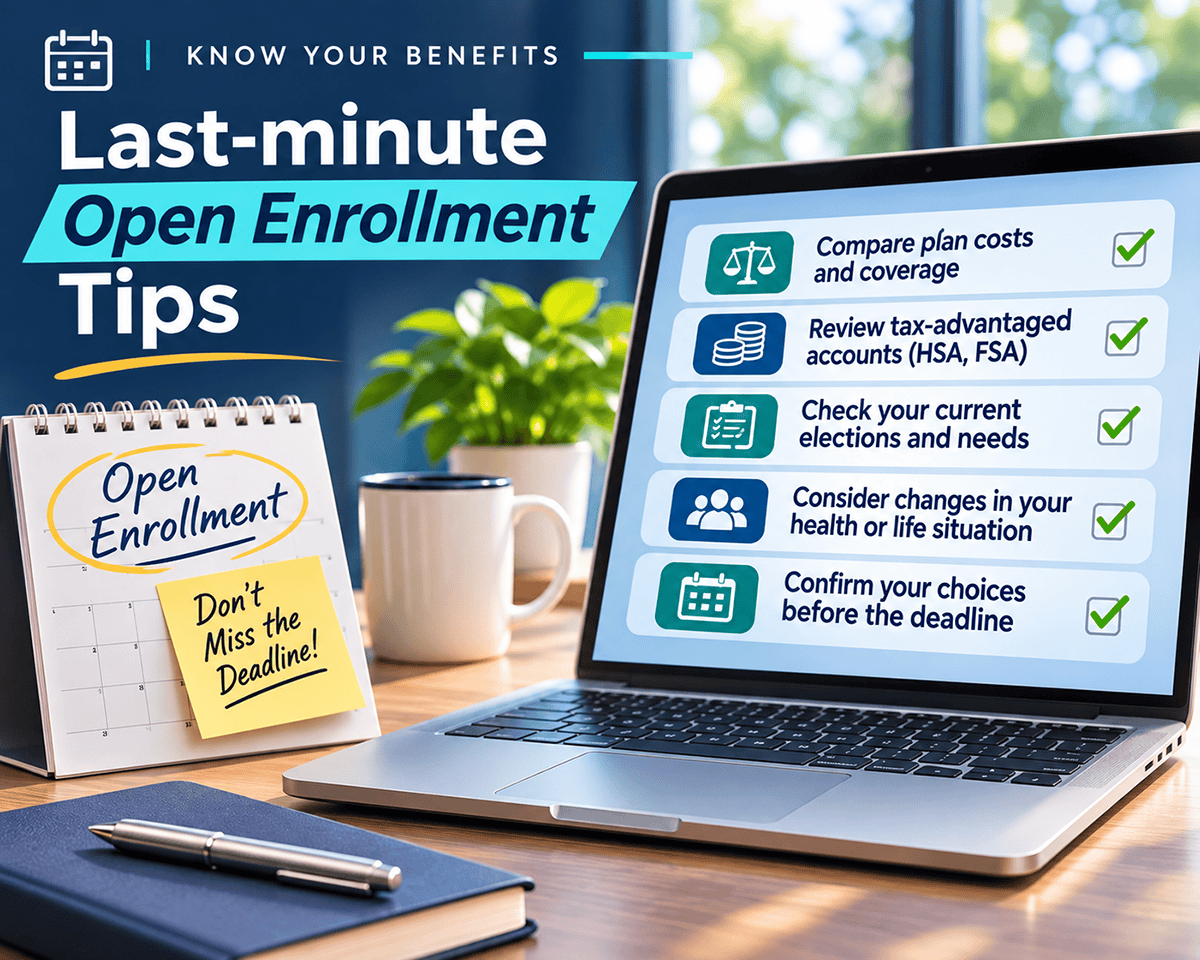
Open enrollment deadlines often arrive faster than anticipated. Amid competing work priorities and personal responsibilities, benefits communications from HR can easily go unreviewed until the enrollment window is nearly closed. Even with limited time remaining, a focused review of available options can result in a benefits selection that aligns well with individual and family needs for the coming year.
This article offers practical, time-efficient steps you can take right now to enroll with confidence, even if you’re getting started at the eleventh hour.
1. Don’t Just Reenroll in Last Year’s Plan
When you’re short on time, the easiest thing to do is let your current elections roll over or pick whatever you had before. Resist that urge. Benefits offerings change year to year. What worked last year might cost you more, or cover less, this time around. Still, it’s worth spending a few minutes comparing what’s changed in your plan documents before you click “confirm.”
2. Compare Plan Costs
It’s tempting to pick the plan with the lowest deductible and call it done, but the deductible is only part of the story. Look at your total potential cost. This includes the amount deducted from every paycheck for premiums, combined with what you’d actually pay out of pocket if you needed care. In many cases, a lower-premium, higher-deductible plan ends up being the better financial deal overall, especially if your employer sweetens the pot with a contribution to a health savings account (HSA) just for signing up. If you expect a medically light year, that combination can save you real money. For those expecting significant medical expenses, such as a procedure, a new dependent or continued treatment, a higher-premium, lower-deductible plan may prove more cost-effective.
3. Make Tax-advantaged Accounts Work for You
If you’re eligible for an HSA or a flexible spending account (FSA), don’t skip this step. Both let you set aside pretax dollars for medical expenses, which effectively gives you a discount on healthcare costs. When paired with a high deductible health plan, an HSA offers a distinct advantage: unused funds carry over from year to year and grow tax-free, making it a valuable long-term savings vehicle rather than simply a means of covering the current year’s copays. FSAs, by contrast, are subject to a “use-it-or-lose-it” provision, so if you choose one, think realistically about what you’ll spend in the coming year rather than guessing high.
4. Look Beyond Medical Coverage
Medical insurance tends to dominate the conversation, but open enrollment is also your chance to review dental, vision and other voluntary benefits, which can be the kind of coverage that’s easy to overlook when you’re rushing. If a family member needs braces, glasses or ongoing eye care, confirm you’re on the right plan. It’s also worth a quick scan for benefits you may not have considered before, such as supplemental options like accident insurance or hospital indemnity insurance, student loan repayment assistance or even pet insurance.
5. Consider What’s Changed in Your Life
Open enrollment decisions should account for developments over the past year, as significant life changes often warrant a reassessment of coverage. Marriage, the birth or adoption of a child, a new caregiving role for an aging parent, or the onset or progression of a health condition can all signal a need for different benefits than were previously selected. Depending on the circumstances, this may include adding a dependent or increasing life insurance coverage.
Learn More
You don’t have to figure this out alone, even at the last minute. Most employers provide online tools, benefits guides, or a live person on the HR or benefits team who can answer quick questions. If you’re unsure about a specific plan detail, a five-minute call or chat can save you from a costly guess. Benefits teams generally expect a wave of last-minute questions and are ready to help. Review your benefits materials and talk to your benefits or HR representative, who can walk you through plan details, options and deadlines.
|
Provided by Hodge, Hart & Schleifer This Know Your Benefits article is to be used for informational purposes only and is not intended to replace the advice of an insurance professional. © 2026 Zywave, Inc. All rights reserved. |